Seamless Transition
Art2Wear tries on a new venue — and becomes more “lively.”
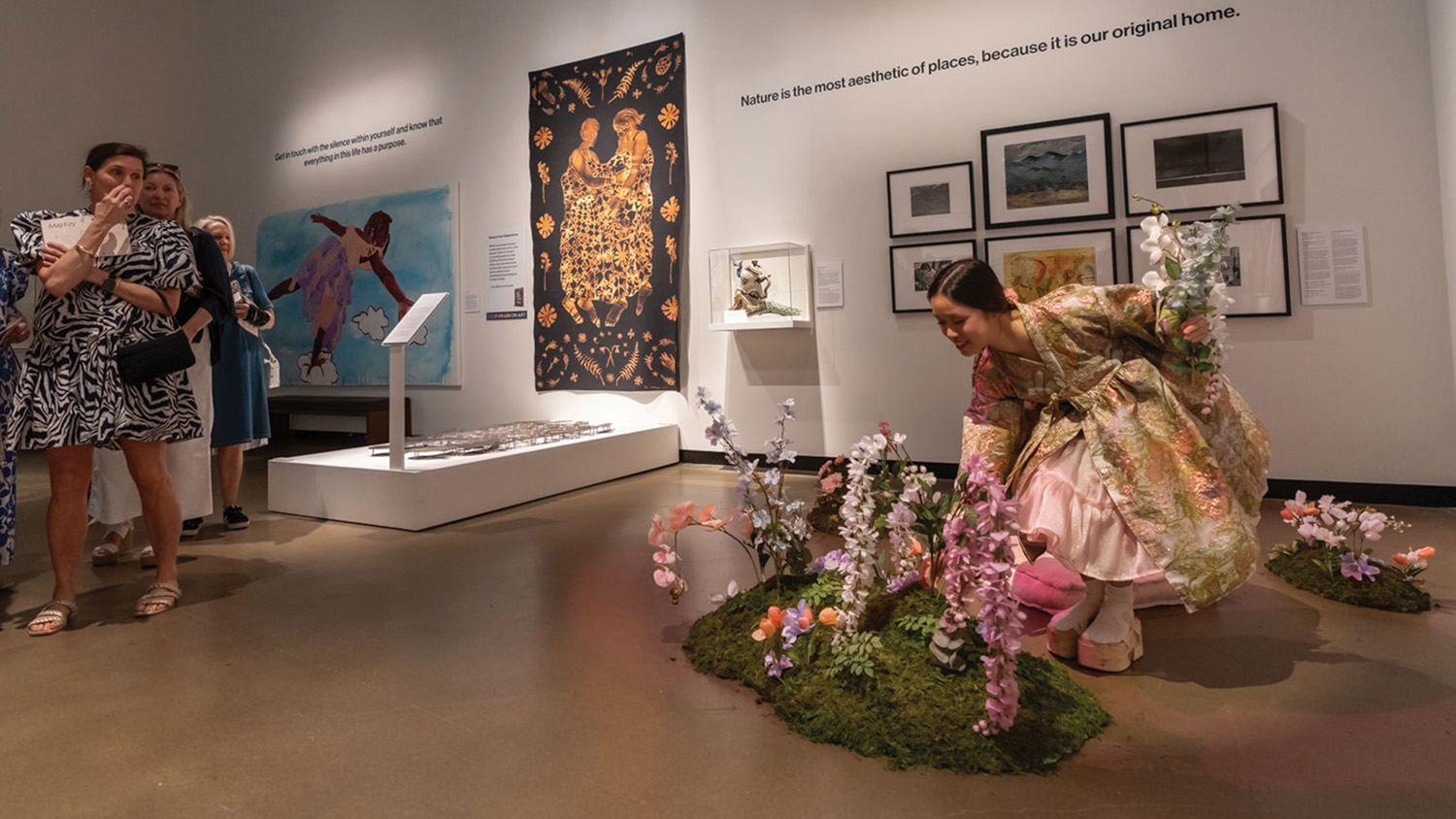
In recent years, Art2Wear has been known primarily as a fashion show. But since its debut in 2001, it has taken many forms and venues. It has been in the Court of North Carolina, Reynolds Coliseum and Stewart Theatre in Talley Student Union. But until this year, it had never been a living museum exhibition.
This year’s Art2Wear was held at the Gregg Museum of Art & Design in April and featured a live show and an exhibit of Art2Wear history. The change in format aligned with the show’s theme, “Revive,” and required students to approach planning and design from a fresh perspective.
“Creating a design to be in front of people for a total of 35 [minutes], … instead of just a 30-second model runway walk, is an extreme ask.”
— Keerthi Nagapudi ’25, co-student director
Preparing for the show was a yearlong endeavor, so student leaders Keerthi Nagapudi ’25 and Lydia Spears ’25 established workdays to keep designers on track. “We wanted people to feel supported,” says Spears. “Creating a design to be in front of people for a total of 35 [minutes], … instead of just a 30-second model runway walk, is an extreme ask,” Nagapudi says. But the most difficult part of the new format was the set design. Students had to not only create wearable art for their models, they had to also create a set for them to interact with as part of the show.
“I was definitely skeptical of it at first,” Nagapudi says. But as the event came together, her doubt faded. Adrienne McKenzie ’11, ’13 MR, one of this year’s Art2Wear advisers, says the intimate nature of the Gregg allowed visitors to see the wearable art up close and appreciate finer details that might be missed if the event were on a large stage. The smaller venue also allowed designers to watch the audience react to their work in real time.
Sara Segerlin, director of the Gregg, says at least 600 people experienced the live event and more than 15,000 took in the static exhibit. “It was a huge success,” she says. “We all tried something innovative and experimental and pushed ourselves, and now we know we can do it.”
Tell Us What You Think
Do you have a personal connection to this story? Did it spark a memory? Want to share your thoughts? Send us a letter, and we may include it in an upcoming issue of NC State magazine.


