A Framework Forward
Researchers draw up plan to work with Native American tribes more thoughtfully.
Caleb Hickman, a supervisory fisheries and wildlife biologist with the Eastern Band of Cherokee Indians (EBCI), concedes scientific research, by its very nature, is extractive. And data collection from within marginalized communities by researchers outside those communities has historically been problematic.
This is the case with research conducted on Native American tribal lands or within tribes, when data, such as information about species endemic to their lands, ecological research or oral histories, is gathered. “There are examples of blood being drawn for one interest but that sample being taken and used for other research without consulting or asking permission from the tribes,” says Hickman. He also points to smartphone apps that encourage what tribes consider trespassing. “People are seeing species on tribal land, and they feel like they can go and collect,” he says. “So data has been collected without permission.”
Hickman and two researchers from the Center for Geospatial Analytics, Christina Perella and Jelena Vukomanovic, are trying to change that. Working on a climate adaptation plan with the EBCI, they encountered the concept of data sovereignty, the idea that tribes can control what is done with the data that’s collected from them.
Perella, a graduate student who studies ecological impacts of climate and land-use change, says that even with the best intentions, the priorities of scientists can differ from those of the communities in which they’ve gathered data. “In academia, there are requirements to publish,” she says, “which can put tribal data out there that [researchers] might not have [obtained] consent for.”
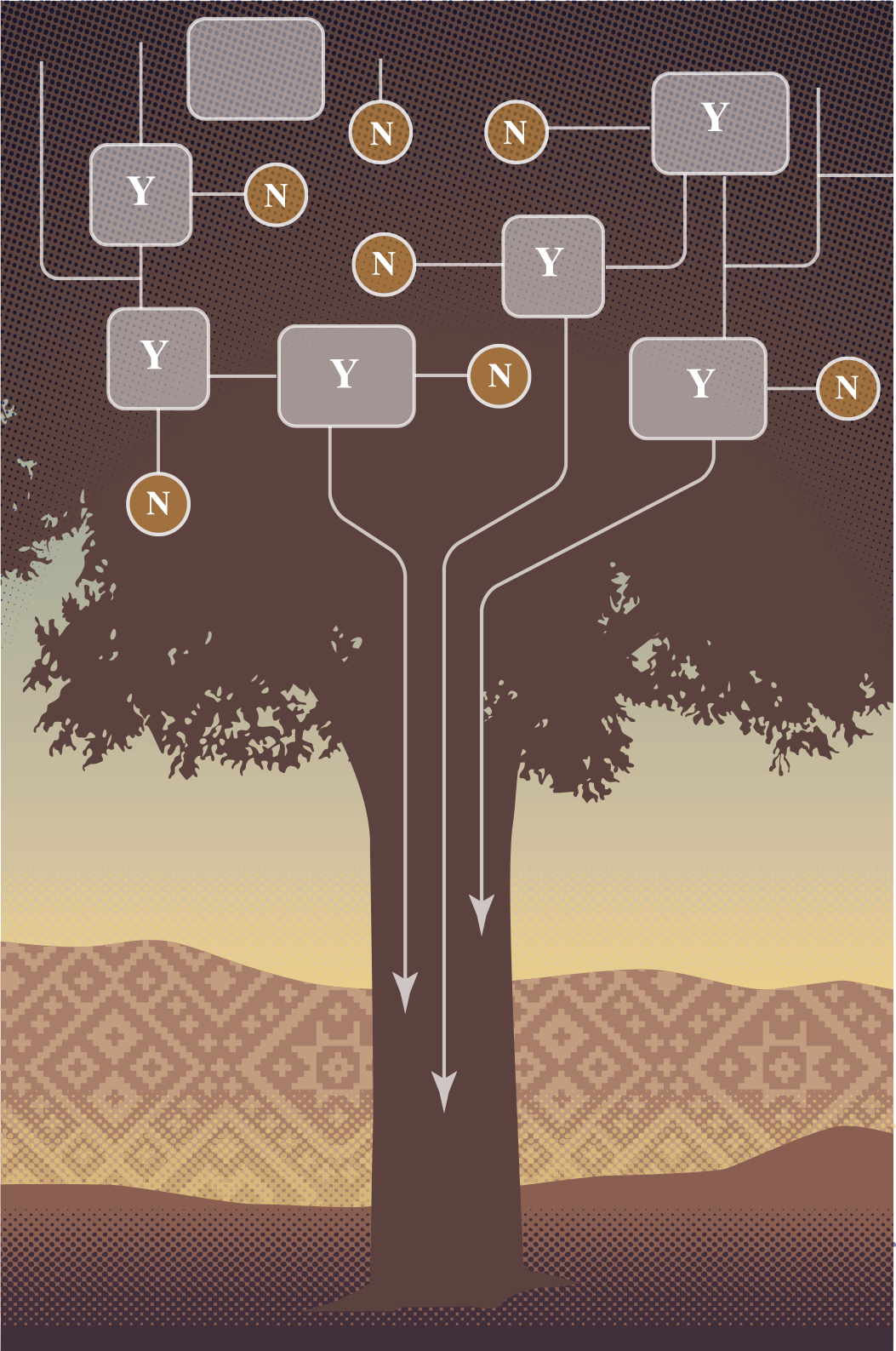
Perella, Vukomanovic and Hickman developed a framework including four types of agreements tribes may consider when working with scientists: data sharing, memoranda of understanding, cost-sharing and nondisclosure agreements. Perella also built a decision tree to help guide tribes when dealing with variable considerations like the use of medical data or involvement of federal funds or partners.
The team hopes the guide will encourage more autonomy and avoid tribal exclusion by scientists when research is conducted. “If the people who are stewarding these lands and have relationships with them aren’t involved in all parts of that process,” says Vukomanovic, a College of Natural Resources associate professor, “that shapes how we identify communities and how stories are told about resilience.”
Tell Us What You Think
Do you have a personal connection to this story? Did it spark a memory? Want to share your thoughts? Send us a letter, and we may include it in an upcoming issue of NC State magazine.