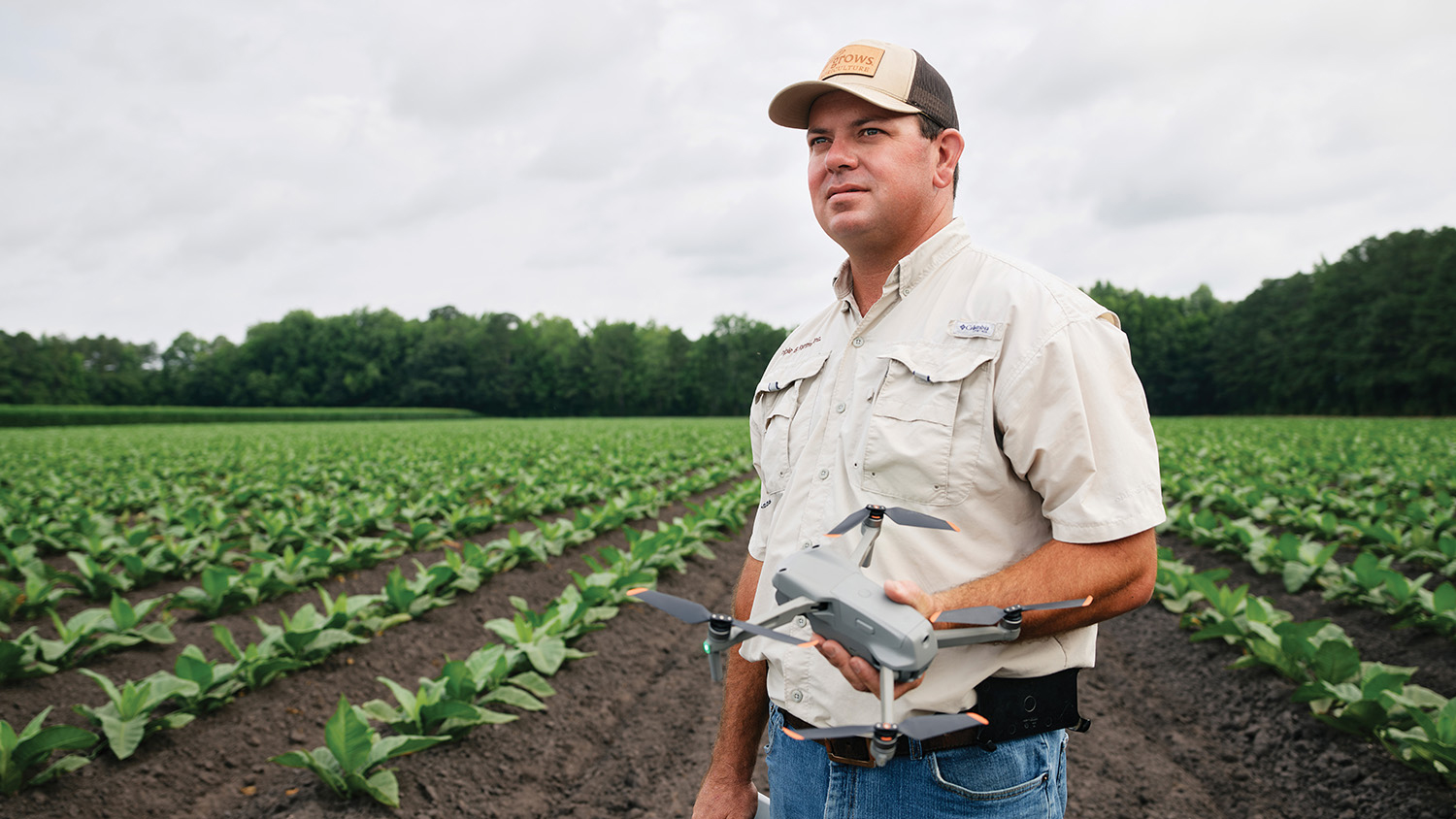
While most people hope for the best, Joe Darkoh ’03 spends his days planning for the worst. Working within NC State’s Emergency Preparedness division, Darkoh ensures that when an IT disaster strikes, campus responds with a plan already in hand.
How would you describe the Resiliency Operations Center’s role in keeping campus running? The center is the central hub for information and monitoring campus conditions on a day-to-day basis. It’s a live, 24/7 space ready to use for emergencies, adverse weather, big campus operations, anything that needs a managed coordination of people, resources and looking at impacts that could disrupt.
When you talk about “IT disaster recovery,” what kind of scenarios do you prepare for? It could be a data breach from a cybersecurity event or a hardware failure. It could be an infrastructure failure that will impact a physical space where IT equipment is housed. It could also be something as simple as someone opening up an email and exposing a computer virus. We prepare for these disasters through proactive and focused planning.
We’ve heard Welcome Week is your office’s Super Bowl. Why is that week such a heavy lift? Welcome Week, housing move-in, lots of people, lots of activities going on. There’s a coordinated effort among campus partners, and our team is there to make sure the experience runs smoothly. We have risk assessments before big events like Packapalooza to think through all the components — fire code regulations, permitting, inclement weather plan, etc. — that could either slow the progress of the event happening, and then, if it has to transition into an alternate format, what does it look like? Who needs to be involved, and how can we support?
What is one simple thing every student or employee should do to be better prepared for a tech outage? Resilience is about nimbleness and being adaptive to anything that might happen. If a tech outage happens, stay flexible. Have a plan to be low-tech ready. Have alternate ways to communicate, and stay plugged into university communications to see when we can get back to some sense of normal.
Tell Us What You Think
Do you have a personal connection to this story? Did it spark a memory? Want to share your thoughts? Send us a letter, and we may include it in an upcoming issue of NC State magazine.
- Categories: